Technical Implementation
The architecture of WebGIS DataLinq is based on a modular and hierarchical structure that enables flexible and efficient data querying and presentation. The system consists of three central components:
Endpoint
Query
View
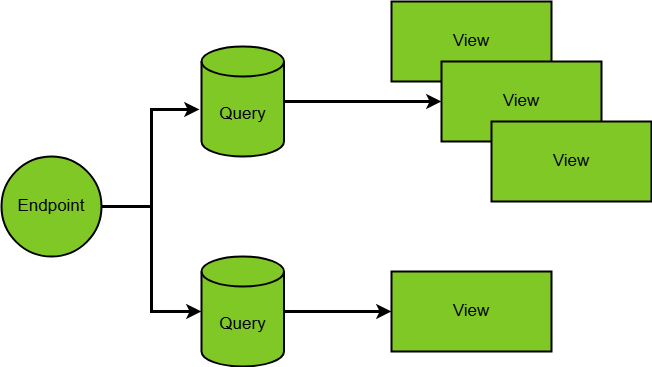
Structure of the Components
1. Endpoint
The endpoint establishes the connection to the data sources and serves as the interface for external systems. It can address various sources, including:
Databases
REST APIs
Other WebGIS DataLinq instances
An endpoint thus defines the basis for data queries and determines where the data comes from.
2. Query
The query enables access to the data provided via the endpoint. It can:
Retrieve specific information from the data source
Return data as raw data (JSON) or as a formatted view
Queries are flexibly configurable and can contain parameters to filter specific data records.
3. View
The view is used for the visualization and presentation of the query results. It enables:
Formatted display of the data in a readable form
Implementation of charts or structured reports
User-friendly presentation of analysis results
Creation of PDF templates for generating reports and documents from the query results
If only raw data output (JSON) is needed, creating a view can be skipped.